
The Factory Behind Every Package: 15 Machines That Bring Packaging to Life
A walk through the machines a packaging plant actually runs — printing, die cutting, bag making, testing — and what each one decides about your order.
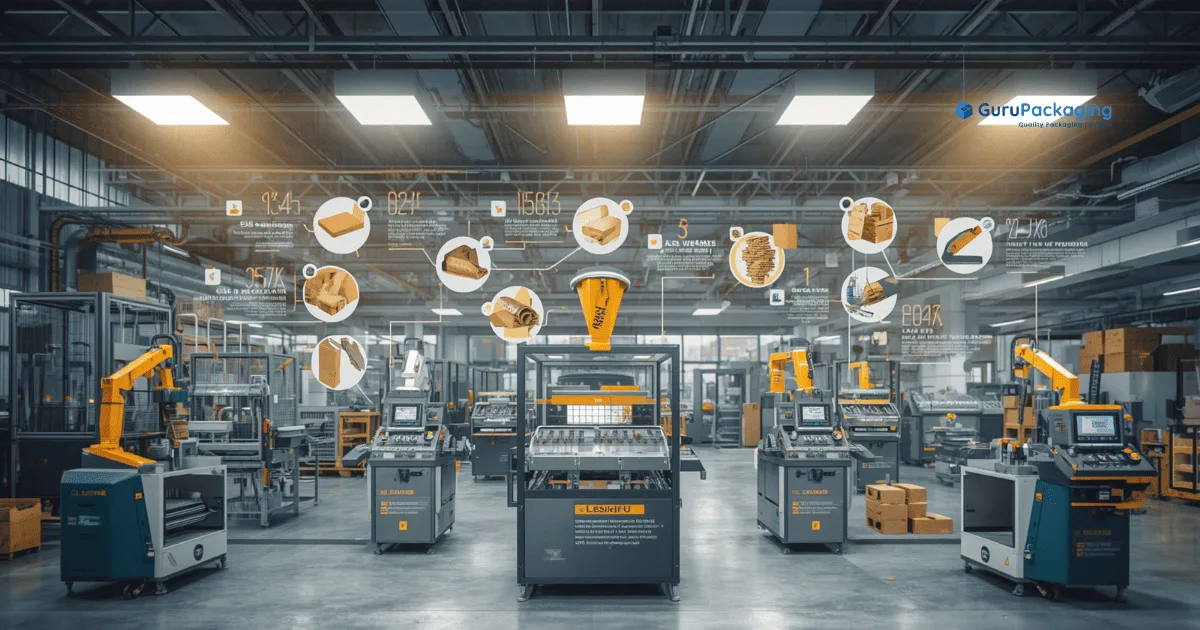
When businesses receive a finished packaging box, shopping bag, garment bag, or poly bag, they usually see only the final product.
What they don't see is the manufacturing journey behind it.
Every custom package passes through multiple stages before it's ready for delivery. From creating a prototype to final quality inspection, specialized equipment ensures every package meets production standards, protects products, and represents the brand professionally.
For companies sourcing custom packaging, understanding this process gives a better appreciation of the technology, precision and expertise the partner plants put into producing consistent, high-quality packaging.
Let's take a look inside a modern packaging factory and explore the machines that help transform simple materials into finished packaging products.
1. CAD Sample Cutting Machine
Every packaging project starts with a prototype.
A CAD sample cutter creates accurate packaging samples before mass production begins. This allows businesses to verify dimensions, folding structure, and product fit while reducing expensive design revisions later.
2. Offset Printing Press
Printing is where packaging begins to represent the brand.
Offset printing machines produce sharp graphics, vibrant colors, and detailed branding for premium packaging products including rigid boxes, folding cartons, and retail packaging.
3. Flexographic Printing Machine
For flexible materials, flexographic printing provides fast and efficient production.
It is commonly used for poly bags, shopping bags, labels, and other flexible packaging applications requiring consistent print quality.
4. Laminating Machine
Packaging often needs more than attractive printing.
Lamination adds gloss, matte, or soft-touch finishes while improving durability and protecting printed surfaces from scratches and moisture during handling.
5. UV Coating Machine
Certain packaging designs require additional visual impact.
UV coating machines create premium finishes that highlight logos, graphics, or specific design elements while improving surface protection.
Many businesses searching for a trusted packaging company in Los Angeles appreciate these finishing techniques because they enhance both appearance and product presentation.
6. Die Cutting Machine
Every custom package has its own unique shape.
Die cutting machines accurately cut printed sheets into finished packaging components, ensuring clean edges and consistent dimensions across every production run.
Without die cutting, custom packaging would not achieve its distinctive designs.
7. Creasing Machine
Before a package can be folded, it must be prepared correctly.
Creasing machines create precise folding lines that help packaging maintain clean edges, accurate assembly, and a professional appearance after production.
8. Folding and Gluing Machine
This machine transforms flat printed sheets into finished boxes.
By folding and securely gluing packaging components, it produces cartons, retail boxes, mailer boxes, and many other packaging formats ready for shipping.
9. Bag Making Machine
Flexible packaging requires specialized manufacturing equipment.
Bag making machines convert plastic films into poly bags, garment bags, shopping bags, and various custom packaging products while maintaining accurate dimensions and sealing quality.
10. Window Patching Machine
Many retail products benefit from allowing customers to see the contents inside.
Window patching machines apply transparent films to packaging, commonly used for bakery boxes, gift packaging, cosmetic packaging, and premium retail boxes.
Businesses investing in custom packaging solutions often choose this feature to improve product visibility without compromising protection.
11. Automatic Quality Inspection Systems
Modern packaging factories rely on more than manual inspection.
Automated quality control systems detect printing inconsistencies, color variations, registration errors, and production defects before products move to the next stage.
Quality control protects both manufacturers and customers from costly production issues.
12. Compression & Strength Testing Equipment
Packaging should perform as well as it looks.
Testing equipment measures stacking strength, compression resistance, and durability to ensure packaging performs during storage, transportation, and distribution.
13. Shrink Wrapping Machine
Before shipping, finished packaging products often need additional protection.
Shrink wrapping secures completed products for transportation while reducing movement during storage and delivery.
14. Packing & Labeling Systems
Once production is complete, packaging must be organized efficiently.
Packing and labeling systems prepare finished products for inventory, shipment, and customer delivery while improving warehouse accuracy.
15. Final Dispatch & Quality Review
The final stage isn't another machine—it's a final verification.
Before leaving the factory, packaging is inspected for quality, counted accurately, and prepared for safe transportation, ensuring every customer receives products that meet manufacturing standards.
Behind Every Machine Is a Commitment to Quality
While each machine performs a different task, they all contribute to one common goal—delivering packaging that is accurate, consistent, and ready to perform in real-world conditions.
A modern packaging manufacturing process isn't simply about producing boxes or bags faster. It's about combining technology, skilled craftsmanship, quality control, and operational planning to create packaging that supports businesses throughout their supply chain.
From the first prototype to the final shipment, every production stage influences product presentation, durability, and customer satisfaction.
Businesses choosing a packaging partner in Los Angeles often evaluate more than the finished product. They also weigh the plants' manufacturing capabilities, production consistency, equipment and the ability to deliver reliably as the business grows.
Packaging Manufacturing Is Constantly Evolving
Modern packaging factories continue investing in automation, advanced printing technologies, precision cutting, and quality inspection systems.
These improvements help the plants:
- Produce consistent packaging quality
- Improve production efficiency
- Reduce material waste
- Support large production volumes
- Maintain accurate specifications
- Deliver projects on schedule
The result isn't simply better packaging.
It's a better manufacturing process that creates greater confidence for businesses ordering custom packaging.
Why Understanding the Manufacturing Process Matters
Many companies focus only on the finished package.
However, understanding how packaging is manufactured helps businesses make more informed decisions when choosing a packaging partner.
An experienced factory isn't defined by one machine.
It's defined by how every machine, process, and quality check works together to produce packaging that meets customer expectations every time.
That level of consistency becomes especially valuable for businesses managing retail products, eCommerce packaging, industrial packaging, food packaging, and branded packaging programs.
Contact Guru Packaging
Behind every successful packaging project is a manufacturing process built on precision, quality and experience.
Guru Packaging does not run these machines. It works with partner plants that do — matching each job to a plant with the right equipment, then managing the run from sample to delivery. You get one point of contact for custom boxes, shopping bags, poly bags, garment bags and other packaging.
Whether you're launching a new product or scaling an existing brand, Guru is ready to help you get packaging that reflects the quality of your business.
Contact Guru Packaging today to discuss custom packaging produced with precision, consistency and long-term reliability.